A customer places an order. The order sheet confirms it. The inventory sheet, updated by someone else an hour earlier, already shows that item at zero. Nobody notices until the order is packed and the item isn't there.
This is overselling, and it is one of the most common and most avoidable operational failures in small businesses running orders and inventory as separate spreadsheets. It rarely comes from a demand spike nobody could have predicted. It comes from a gap between two records that were supposed to agree and did not.
Why Orders and Inventory Fall Out of Sync
They live in separate files
The most common setup in a growing small business is an order tracking sheet and an inventory sheet that exist independently. Someone processes an order in one file. Someone else updates stock in another. Unless there is a direct, immediate connection between the two, they will drift apart the moment either one is updated without the other.
Updates happen at different times
Even within a single spreadsheet system, orders and inventory adjustments often get entered at different points in the day. An order might be confirmed in the morning based on a stock count that was accurate at 9am but is no longer accurate by 11am, once three other orders have been processed against the same SKU.
Multiple people are updating the same data
Once more than one person touches orders or inventory, the risk compounds. Two team members can both confirm an order against the same unit of stock within minutes of each other, each working from information that was correct when they looked at it but is no longer correct by the time the second order is confirmed.
No single source of truth
When stock quantity exists in more than one place, whether that is an order sheet with its own quantity column and a separate inventory sheet, there is no way to guarantee both numbers agree at any given moment. Reconciling them becomes a manual task that competes with actually processing orders.
What Overselling Actually Costs
The immediate cost is obvious: an order that cannot be fulfilled as promised. The downstream costs are usually larger.
Customer trust. Confirming an order and then reversing it is a worse experience than never confirming it in the first place. Customers who experience this once are less likely to return.
Emergency sourcing. Filling a gap after the fact often means a rushed reorder at a worse price, or scrambling to source the item from an alternate supplier at short notice.
Staff time on damage control. Someone has to contact the customer, offer an alternative or a refund, and often manually reconcile how the mismatch happened in the first place. This is time not spent on new orders.
Marketplace and channel penalties. For businesses selling through platforms like Shopify or Etsy, repeated cancellations due to unavailable stock can affect account standing and search visibility on those platforms.
How to Prevent Overselling
Set an accurate reorder point, not just a zero threshold
Many overselling situations happen because stock does not hit true zero before an order is confirmed against it. If your reorder point accounts for real usage and lead time, stock is flagged for replenishment before it reaches a level where confirming a new order becomes risky. For the full calculation, how to set a reorder point covers the formula and worked examples.
Reduce the number of places stock quantity lives
Every additional place where a quantity figure is stored independently is another opportunity for the numbers to disagree. The fewer independent copies of "how much stock do we have," the fewer chances for drift.
Connect order confirmation to real-time stock visibility
The most reliable fix is structural: an order should be checked against the actual current stock level at the moment it is confirmed, not against a number that was accurate when someone last opened the inventory sheet. This requires orders and inventory to reference the same live data rather than two separately maintained records.
Build in a buffer for fast-moving SKUs
For your highest-velocity products, a small safety margin between what shows as available and what is actually promised to customers gives a little room for the lag between an order being placed and stock being deducted, particularly across multiple sales channels.
Review overselling incidents, not just individual mistakes
When an overselling incident happens, the useful question is not just how to fix that one order. It is why the gap existed at that moment. Reviewed over time, these incidents usually point to the same one or two structural causes, which is far more useful than treating each one as an isolated error.
How Fixeets Connects Orders and Inventory
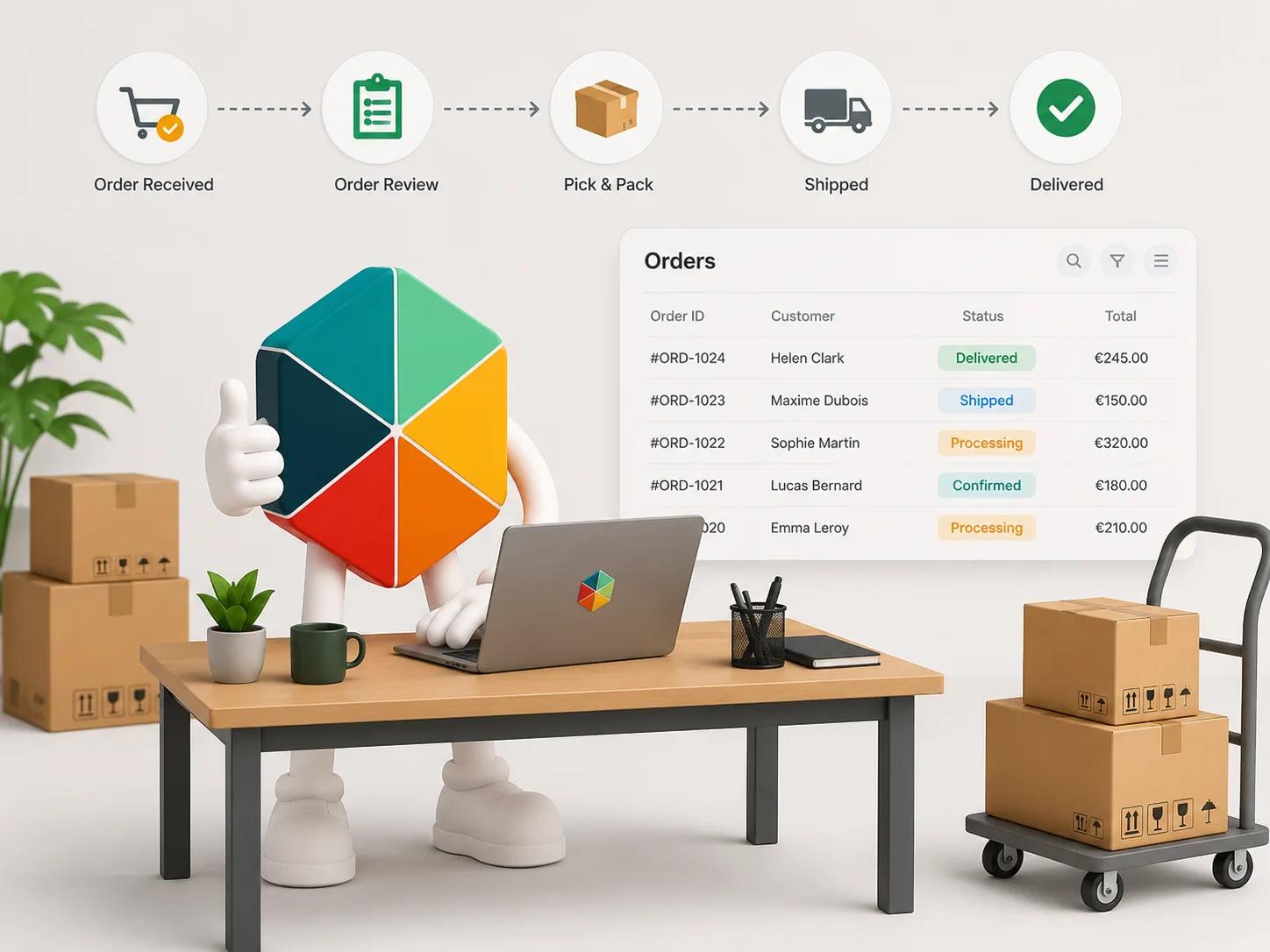
Fixeets Orders Management can be linked to Fixeets Inventory Management, with both modules updating in real time. When an order is confirmed against a SKU, the stock level reflected in Inventory Management updates accordingly, rather than existing as a separate figure that someone has to reconcile by hand.
This removes the structural cause behind most overselling: two records of the same quantity, maintained separately, drifting apart between updates. With linked modules, there is one live figure, checked at the moment an order is confirmed.
To see how order confirmation and stock visibility work together, visit the Fixeets orders management page. For the inventory side of the connection, the Fixeets inventory management page covers stock tracking, low-stock alerts, and multi-location visibility.
Key Takeaways
- Overselling happens when order data and inventory data fall out of sync, most often because they are maintained as separate records updated at different times by different people.
- The cost of overselling extends beyond the individual order to customer trust, emergency sourcing costs, staff time on damage control, and marketplace standing for multichannel sellers.
- Prevention starts with an accurate reorder point, reducing the number of independent places stock quantity is recorded, and building in a small buffer for fast-moving SKUs.
- The most reliable fix is structural: connecting order confirmation to a single, live stock figure rather than two separately maintained records.
- Reviewing overselling incidents for their root cause, rather than fixing each one individually, usually reveals the same one or two structural gaps worth closing permanently.
Frequently Asked Questions
What causes overselling in a small business? Overselling happens when an order is confirmed against stock that is no longer actually available. The most common cause is order data and inventory data being maintained as separate records that are updated at different times, creating a gap where the two no longer agree.
How do I stop overselling on Shopify or Etsy? The underlying fix is the same regardless of sales channel: reduce the gap between what your records say is available and what is actually in stock. This means connecting order confirmation to real-time inventory data rather than a stock count that may already be outdated by the time an order comes in.
What is the difference between overselling and a stockout? A stockout is when stock reaches zero. Overselling is confirming an order for stock that is not actually available, which can happen even when records show stock remaining, if that figure is inaccurate or outdated.
Can Google Sheets prevent overselling? A well-structured Google Sheets system can reduce overselling risk with disciplined reorder points and careful manual updates, but raw spreadsheets have no built-in mechanism to check real-time availability at the moment an order is confirmed. The risk increases as order volume or the number of people updating records grows.
How does linking orders and inventory prevent overselling? When order and inventory data reference the same live figure instead of two separately maintained records, an order confirmed against a SKU immediately reflects in available stock. This removes the lag and duplication that typically cause the two records to disagree.
What should I do after an overselling incident happens? Beyond resolving the individual order with the customer, review why the gap existed at that moment. Recurring overselling incidents usually trace back to the same one or two structural causes, such as delayed manual updates or stock quantity being tracked in more than one place.
Does Fixeets prevent overselling automatically? Fixeets Orders Management can be linked to Fixeets Inventory Management, with both updating in real time. This means order confirmation checks against a single live stock figure rather than a separately maintained inventory record, which addresses the most common structural cause of overselling.
Is overselling more common with multiple sales channels? Yes. Selling across more than one channel increases the number of places an order can be placed against the same stock, which increases the risk of two orders being confirmed against inventory that can only fulfil one of them, particularly without real-time synchronization.
How much safety buffer should I keep to avoid overselling? This depends on order velocity and how frequently stock levels update across your sales channels. Fast-moving SKUs generally warrant a small buffer between recorded available stock and what is actually promised to customers, sized based on how often that specific SKU sells and how quickly your systems reflect each sale.
Is overselling only a risk for retail and ecommerce businesses? No. Any business that confirms customer orders against limited stock, including wholesale and B2B distributors, can oversell if order and inventory records are not kept in sync. The operational and reputational cost is often more severe in B2B relationships involving repeat, committed orders.