Small manufacturing workshops run on expertise. The team knows the machines, the quirks, the history. That knowledge is valuable, and it keeps operations moving every day.
The opportunity lies in capturing that knowledge inside a system. Once there, it becomes visible, shareable, and actionable beyond the people who currently hold it.
That is what structured maintenance management does. It takes the experience already in the room and gives it a home.
What Does Structured Maintenance Management Actually Mean?
Structured maintenance means having a clear record of every asset, a schedule for preventive tasks, and a log of every intervention, all in one place.
For a small workshop, this does not require an enterprise system or an IT department. It requires the right tool for the team size. A CMMS, or Computerized Maintenance Management System, is that tool. It replaces scattered records with a single source of truth for equipment history, maintenance schedules, and operational costs.
One of the clearest trends in manufacturing today is the modernization of smaller plants, where CMMS replaces manual logbooks and spreadsheet tracking, raising preventive compliance and reducing repeat breakdown cycles.
Why Preventive Maintenance Matters for Small Teams
The most common maintenance model in small workshops is reactive. A machine breaks, the team fixes it, and operations resume. This works, but it carries a cost that is easy to underestimate.
The cost of a single emergency repair can easily exceed what a full year of structured maintenance software would have cost. More importantly, reactive maintenance does not build knowledge. The same fault can return two months later with no record of what caused it the first time.
Preventive maintenance changes the dynamic. Scheduled tasks reduce the frequency of unexpected breakdowns, extend equipment life, and give the team a clearer picture of each asset's condition over time.
For a workshop with 10 to 30 machines, even a modest reduction in unplanned downtime has a direct impact on production output and costs.
Best CMMS Software for Small Businesses Compared
"Best" depends on how your team actually works. These are the CMMS options small businesses evaluate most often, and where each genuinely fits.
Fixeets Maintenance Management
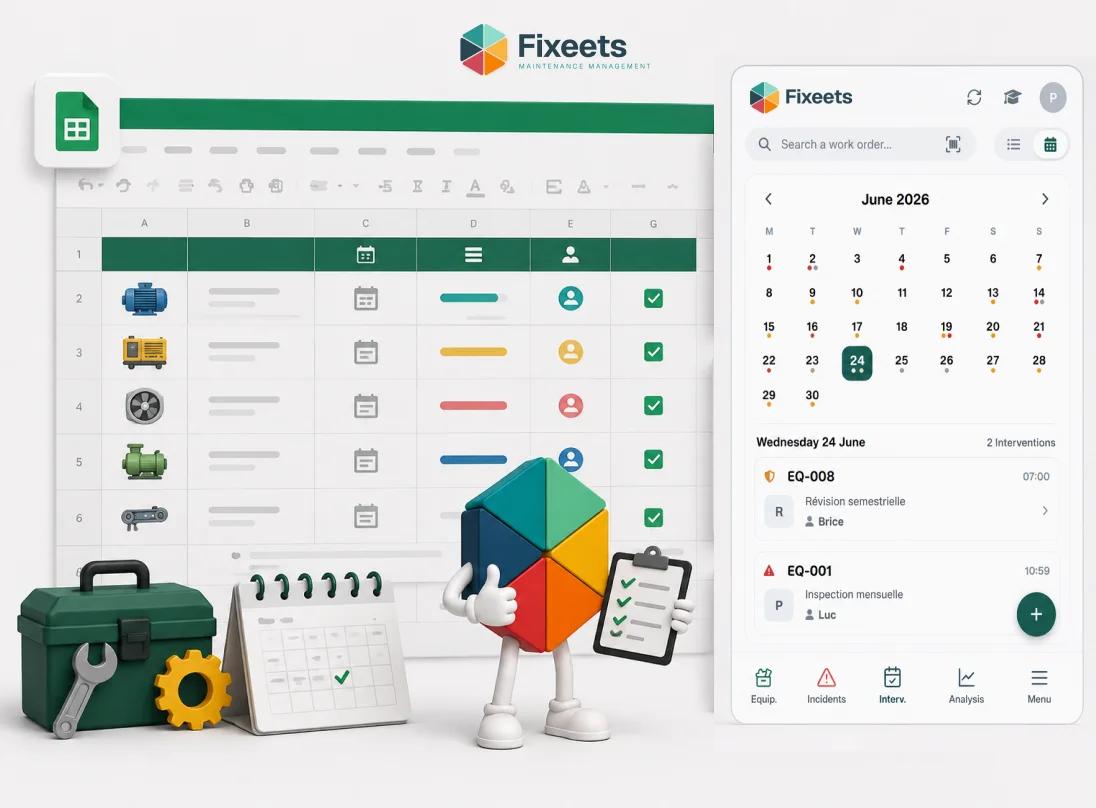
Fixeets runs maintenance management inside Google Sheets: asset registry, preventive schedules with automatic reminders, intervention logs, digital checklists, spare parts tracking, and cost reporting.
- Strengths: no new platform to learn, no migration, works where teams already work, priced for small businesses
- Limits: built for SME-scale operations, not multi-plant enterprise maintenance; no IoT or condition-monitoring integrations
- Best for: small teams on Google Workspace that want structured maintenance without adopting a separate platform
UpKeep
UpKeep is a mobile-first CMMS focused on work orders created and closed from a phone.
- Strengths: strong mobile experience for technicians in the field
- Limits: per-user pricing adds up as the team grows, and advanced features sit in higher tiers
- Best for: field-heavy teams where every technician works primarily from mobile
MaintainX
MaintainX centers on work orders and standardized procedures, with a messaging-style interface teams pick up quickly.
- Strengths: fast adoption, good procedure and checklist workflows
- Limits: deeper reporting and integrations are tied to higher plans
- Best for: teams that want digital work orders and procedures with minimal training
Limble
Limble is a general-purpose CMMS known for approachable setup and clear asset hierarchies.
- Strengths: balances ease of use with fuller CMMS depth as needs grow
- Limits: a separate platform to adopt and maintain, with per-user costs
- Best for: growing maintenance teams that expect to expand their CMMS usage over time
Fiix
Fiix, part of Rockwell Automation, is a CMMS with strong asset management and integration capabilities.
- Strengths: depth for larger asset bases and integration with industrial systems
- Limits: more system than most small workshops need, with matching setup effort
- Best for: operations heading toward industrial-scale maintenance programs
Side-by-side comparison
| Tool | Best for | Runs inside Google Sheets | Typical effort to adopt |
|---|---|---|---|
| Fixeets | Structured maintenance in Sheets | Yes, natively | Low |
| UpKeep | Mobile-first field teams | No | Low to medium |
| MaintainX | Work orders and procedures | No | Low to medium |
| Limble | Growing CMMS depth | No | Medium |
| Fiix | Industrial-scale programs | No | High |
For a small workshop, the deciding question is rarely feature count. It is whether the team will actually keep the system updated. A CMMS that fits existing habits gets used; one that requires new habits often does not survive the first busy month.
What a CMMS Gives a Workshop Team
Real-Time Equipment Visibility
A good CMMS gives the team an up-to-date view of every asset: its current status, what maintenance is scheduled, what has been completed, and what is outstanding. This kind of visibility turns maintenance from a reactive scramble into a managed process.
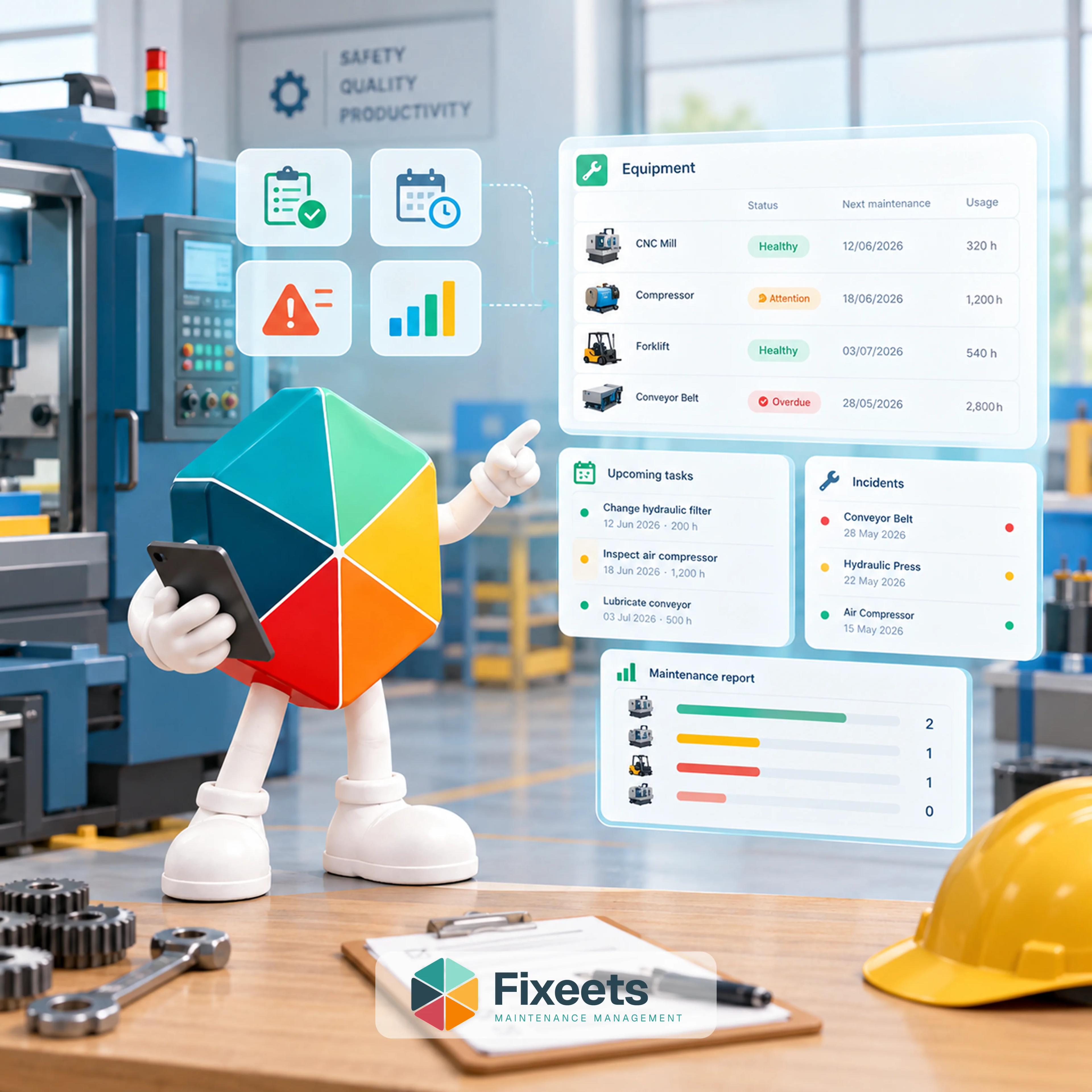
Fixeets Maintenance Management provides a centralized dashboard where technicians and managers can see ongoing interventions, equipment history, and upcoming tasks at a glance, whether from the workshop floor or a mobile device.
Planned Preventive Maintenance
Scheduling preventive tasks manually is difficult to sustain. A CMMS automates this. Recurring tasks are triggered by time intervals or usage frequency, and the team receives alerts before tasks become overdue.
Fixeets allows workshops to define maintenance schedules for each asset and receive automatic reminders for upcoming preventive tasks. This keeps equipment in good condition without requiring someone to track everything manually.
Incident Reporting and Fast Response
When a breakdown happens, the response time matters. A structured incident reporting system means the right technician is notified immediately, with the right information to act.
Fixeets captures breakdown events, assigns them to responsible technicians, and tracks response and resolution. This keeps the team coordinated and maintains operational continuity even during corrective maintenance events.
Complete Intervention History
Every maintenance job leaves a record: who completed it, how long it took, which parts were used, and any relevant comments. Over time, this builds a full audit trail for every asset in the workshop.
This history is what makes maintenance decisions smarter. When a machine shows a pattern of repeated failures, that pattern becomes visible. When it is time to decide whether to repair or replace an asset, the data is there to support the decision.
Operational Checklists and Standardized Procedures
Consistency in maintenance execution reduces errors and keeps safety standards high. Fixeets supports digital checklists that standardize how tasks are performed, ensuring nothing is missed regardless of which technician is handling the job.
This is especially useful when the team grows or when less experienced technicians are brought onboard. The procedure is in the system, not in someone's head.
Maintenance Cost Tracking
Knowing what maintenance costs per asset, per period, and per intervention type gives workshops the information to manage their budgets proactively. Fixeets tracks labor, spare parts, and total intervention costs so the team can see where resources are going and where there is room to optimize.
Spare Parts Management
Running out of a critical spare part during a repair is avoidable. Fixeets tracks spare parts availability and consumption, so the team can maintain the right stock levels and avoid delays caused by missing components.
User Access and Permissions
As teams grow, controlling who can access and modify maintenance data becomes important. Fixeets supports role-based access so each team member sees and interacts with the information relevant to their role, with sensitive operational data protected.
Performance Indicators That Drive Better Decisions
Fixeets includes reporting on key maintenance KPIs: downtime by asset, intervention frequency, the ratio of preventive to corrective maintenance, and overall asset performance. These indicators help managers identify where to focus attention and demonstrate the value of the maintenance program over time.
Getting Started: What the Transition Looks Like
Moving to structured maintenance does not require a long deployment or a complex setup. The practical starting point for most workshops is the equipment database: enter the machines, define the key attributes, and set the first preventive schedules.
Because Fixeets runs inside Google Sheets and connects to a web application accessible on any device, most teams are already familiar with the environment. There is no new platform to learn from scratch, and no dependency on IT support to get started.
From there, the system builds itself through use. Each logged intervention adds to the asset history. Each completed preventive task strengthens the schedule. Over time, the team gains a maintenance picture that would have taken years to build manually.
A Practical Step Forward for Growing Workshops
Structured maintenance management is not just for large manufacturers with dedicated maintenance departments. It is a practical capability for any workshop that relies on its equipment to deliver consistent output.
The shift from informal maintenance habits to a structured CMMS is a step forward in operational maturity: one that pays off in reduced downtime, better equipment reliability, and a team that can focus on doing good work rather than chasing unexpected failures.
To explore how Fixeets supports maintenance management for operational teams, visit Fixeets Maintenance Management.
To understand how to decide between preventive and corrective tasks for each piece of equipment, our guide on preventive vs corrective maintenance planning for small teams covers the prioritization framework in detail.
If your team is just getting started, how to simplify maintenance management with Google Sheets covers the practical first steps without requiring a complex system.
And if you want the foundations before evaluating any tool - what a CMMS does, preventive strategy, and the KPIs that matter - our complete guide to CMMS and maintenance management covers the full topic.
Key Takeaways
- Reactive maintenance is the default in most small workshops, but it does not build knowledge. The same faults recur without a record of what caused them
- A CMMS gives small manufacturing teams a single source of truth for equipment history, maintenance schedules, and operational costs
- Preventive maintenance reduces unexpected breakdowns, extends equipment life, and gives teams with 10 to 30 machines predictable production planning
- Fixeets provides real-time visibility, planned scheduling, incident reporting, spare parts tracking, and cost monitoring without requiring IT support
- The transition to structured maintenance starts with the equipment database and builds itself through use - each logged intervention strengthens the record over time
Frequently Asked Questions
What is the best CMMS software for a small workshop? It depends on how the team works. Fixeets fits teams already on Google Workspace that want structure without a new platform. UpKeep and MaintainX suit mobile-first field teams. Limble and Fiix fit teams expecting to grow into deeper CMMS features or industrial-scale programs.
Does Fixeets Maintenance require IT support to set up? No. It runs inside Google Sheets and a connected web app, environments most teams already know. The starting point is building the equipment database and setting the first preventive schedules, without a dependency on IT to get going.
Can Fixeets Maintenance track spare parts? Yes. It tracks spare parts availability and consumption alongside asset records, so the team can maintain the right stock levels and avoid delays caused by missing components during a repair.
Is Fixeets Maintenance available on mobile? Yes. Technicians and managers can view interventions, equipment history, and upcoming tasks from the workshop floor or a mobile device, not only from a desk.
What is the difference between Fixeets and UpKeep or MaintainX? UpKeep and MaintainX are standalone mobile-first CMMS platforms. Fixeets runs inside Google Sheets, so teams already using Sheets for other operations avoid adopting and maintaining a separate system.
Does Fixeets support preventive maintenance scheduling? Yes. Workshops can define maintenance schedules per asset and receive automatic reminders for upcoming preventive tasks, triggered by time interval or usage frequency.
How much does CMMS software typically cost for a small business? Dedicated standalone CMMS platforms like the ones compared above typically run $20 to $50 per user per month, and that adds up quickly once every technician who touches a work order is counted. Fixeets works differently: it runs inside Google Sheets on a flat-rate model, not per-user. The Standard plan is free with no time limit, covering up to 30 interventions a month. The Enterprise plan is $34.99/month outside Europe or €29.99/month within Europe, with no per-seat pricing.
Is Fixeets suitable for industrial-scale maintenance programs? Fixeets is built for SME-scale operations rather than multi-plant enterprise maintenance, and does not currently offer IoT or condition-monitoring integrations. For a workshop with 10 to 30 machines, it covers the core of what a CMMS provides.