An invoice number is the unique reference that identifies one invoice, and only one. The rule behind it is simple: numbers follow each other, never repeat, and are never reused, even when an invoice is cancelled. Most small businesses get this right for the first fifty invoices. Then a row gets copied in the spreadsheet, two invoices both say INV-0042, and nobody notices until a customer pays the wrong one.
What an Invoice Number Is and Why It Should Follow a Sequence
The invoice number is how you, your accountant and your customer refer to a sale without ambiguity. When numbers run in order with no gaps, anyone reading your books can see at a glance that nothing is missing. A gap or a duplicate is the first thing that raises questions during a review, because it can mean a lost invoice, a deleted one, or a sale that was never recorded.
Keep it separate from the other numbers around a sale:
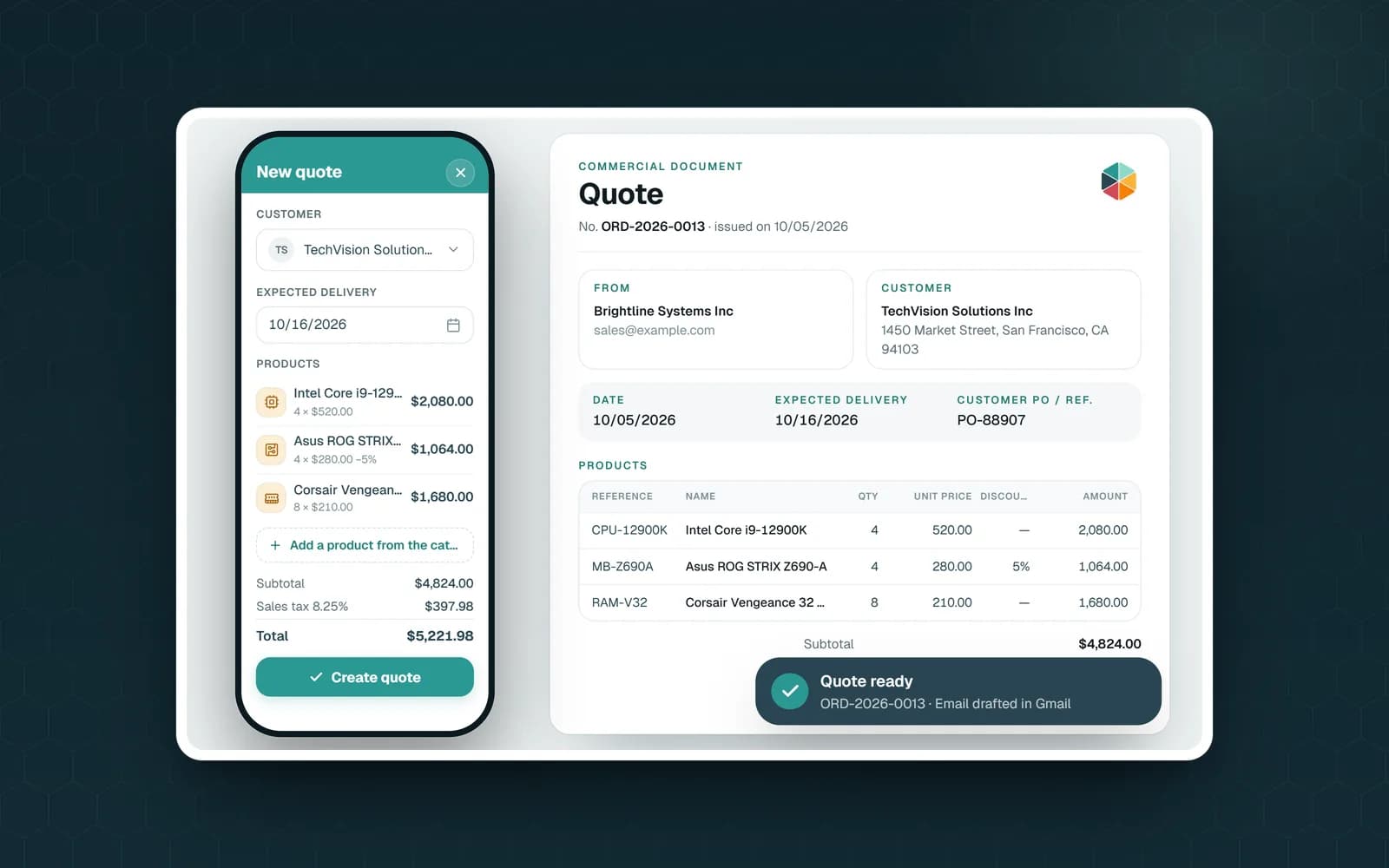
- The order or quote number, which you give when the customer asks for a price, for example ORD-2026-0118
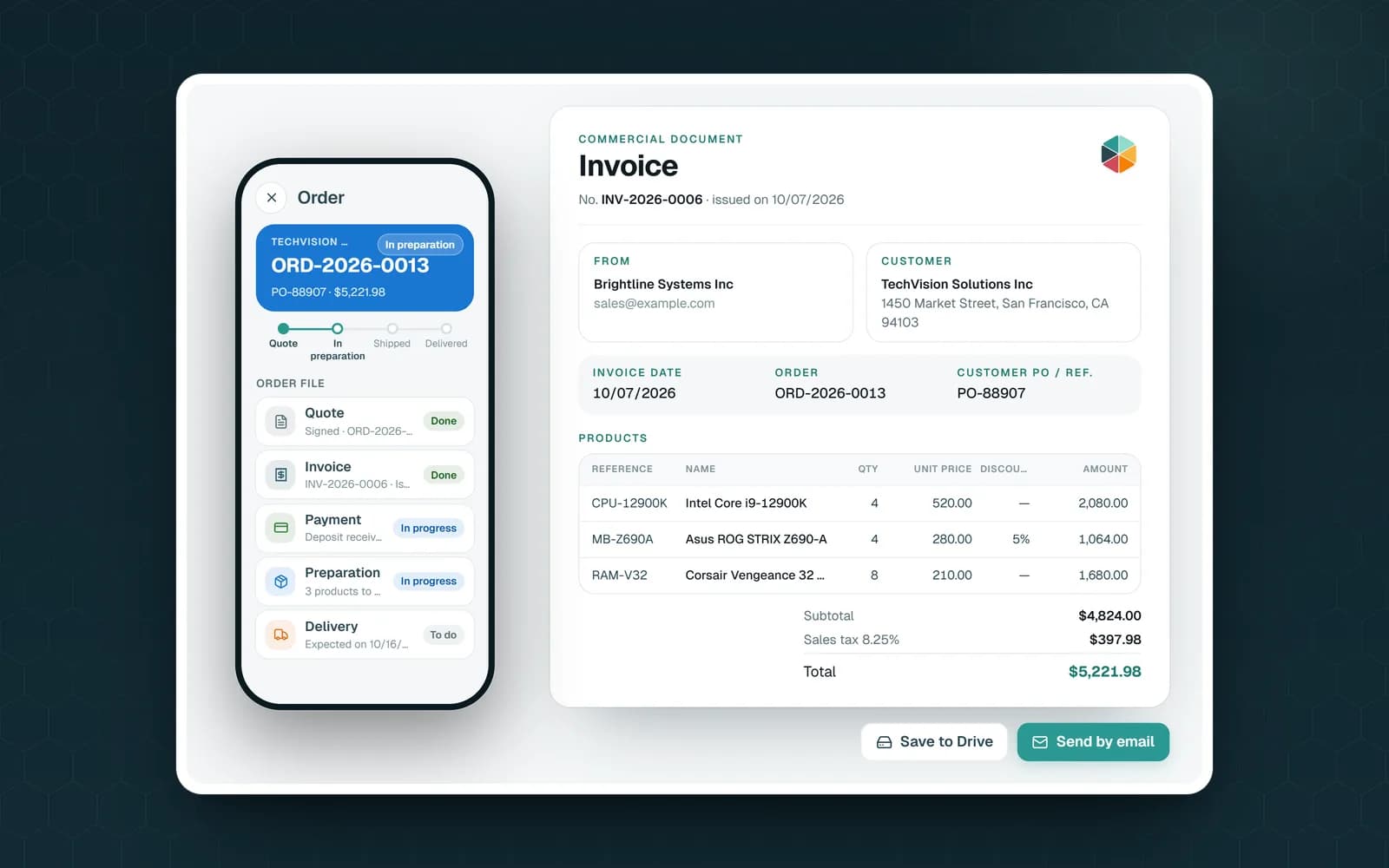
- The invoice number, given only when you bill, for example INV-2026-0093
- The customer's purchase order number, which you copy onto the invoice so their accounts team can match it, for example PO-4471
One order can be billed in several invoices, and a quote that is never accepted never gets an invoice number. That is why the two sequences should not be the same.
Common Invoice Number Formats, With Examples
There is no single right format. What matters is that it stays the same and that the counter keeps going up.
| Format | Example | When it works |
|---|---|---|
| Plain counter | 1001, 1002, 1003 | Very low volume, one activity |
| Year + counter | INV-2026-0001 | Most small businesses: easy to read, restarts each year |
| Year + month + counter | INV-202610-001 | Many invoices a month, easy filing by month |
| Prefix per activity | RNT-2026-0001 and INV-2026-0001 | Two activities billed separately, each with its own series |
A few practical tips:
- Pad the counter (0001 rather than 1) so invoices sort correctly in a spreadsheet and in your file folder.
- Starting at 1001 is fine. Many businesses do it so the first customer does not see invoice number 1. What matters is that the sequence continues from there.
- Avoid a customer code as the counter, like ACME-0007. Each customer gets their own little sequence, and gaps across your business become impossible to spot.
- Pick the format before the first invoice of the year. Changing it mid-year is possible, but it makes the books harder to read.
Invoice Numbering Mistakes That Break the Sequence
Most numbering problems come from the way invoices are made, not from the format.
- Gaps from deleted drafts. A number given to a draft that is then deleted leaves a hole. Only give the number when the invoice is actually issued.
- Duplicates from copied rows. Duplicating last month's invoice in a spreadsheet copies its number too. So does two people creating invoices at the same time.
- Reused numbers. Cancelling INV-2026-0093 and giving its number to the next invoice is the one mistake to never make. The number belongs to the first invoice forever.
- Editing an invoice already sent. Once the customer has it, changing the price or the products in the same file means your copy no longer matches theirs.
Wrong Invoice: Cancel and Replace, or Issue a Credit Note
Once an invoice has been sent, do not edit it and do not delete it. Fix it with a new document that points to the old one.
- Not paid yet, with an error (wrong price, wrong address, missing line): issue a replacement invoice with a new number, which states "Cancels and replaces invoice no. INV-2026-0093". The original stays in your records, marked as replaced.
- Already paid, then refunded or reduced: issue a credit note. It has its own number, it refers to the original invoice ("Credit note for invoice no. INV-2026-0093"), and it shows the amount you owe back or deduct.
Either way, every number stays used exactly once, and the trail from the first invoice to the correction is complete.
Invoice Numbering Rules Depend on the Country
In the US, no federal rule sets an invoice numbering format. What the IRS asks is that your records support the income and expenses on your tax return, and that you keep them for as long as they may be needed; its page on how long to keep records, listed in the sources below, gives the periods. Sales tax is set state by state, so ask your accountant what an invoice must show in the states where you sell.
Other countries can be stricter. Many European countries require each invoice to carry a unique number in a continuous sequence, and several are moving to mandatory electronic invoicing. The exact rules change from one country to the next, so check them with the tax administration of each country where you bill, or with your accountant. A sequential format such as INV-2026-0001 fits almost every case, which makes it a safe default.
Numbering Invoices Without Thinking About It in Google Sheets
A spreadsheet will happily accept two identical invoice numbers. The fix is to let the tool give the number and refuse a duplicate.
Fixeets Orders, our order management app that works with Google Sheets, handles this from the order. You set your format once in the options, with tags such as {YEAR}, {MONTH} and {NUMBER}. The default is INV-{YEAR}-{NUMBER}, which gives INV-2026-0001, and the counter restarts each year because the year is in the format. Then, for each invoice:
- The next number is suggested when you create the invoice, and you can still change it
- A number that is already used is refused
- Once the invoice is sent, its products and prices are locked
- An unpaid invoice with an error is fixed with "Cancel and replace": a new number, and the old invoice stays on your Drive
- A paid invoice is corrected with a credit note that has its own number and refers to the invoice
- The PDF is saved to your Google Drive, with an optional Factur-X (XML inside the PDF) or UBL (Peppol BIS 3.0) version
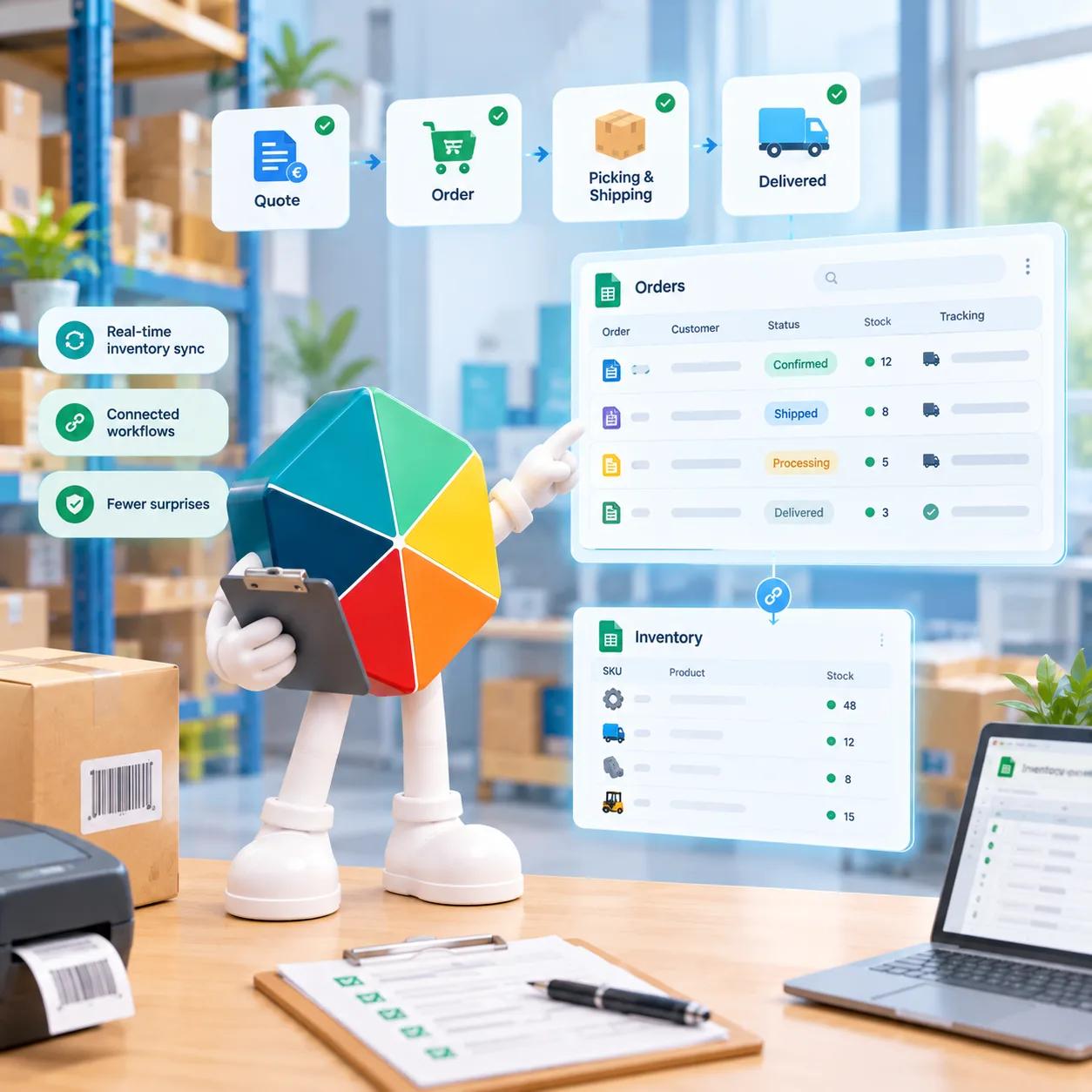
The same file keeps the order from quote to delivery, as described in how to track orders in Google Sheets and in what order management covers. The free plan lets you try it on real invoices; limits are on the pricing page.
Invoice Numbering Rules to Remember
- One number per invoice, used once, never reused
- A sequence that only goes up, with no gaps
- A format that stays the same, such as INV-2026-0001
- The number is given when the invoice is issued, not on the draft
- A sent invoice is never edited: replace it with a new number, or issue a credit note
- Separate numbers for orders and invoices, with the customer's PO copied onto the invoice